
Residential
Solar for your house, priced on your numbers.
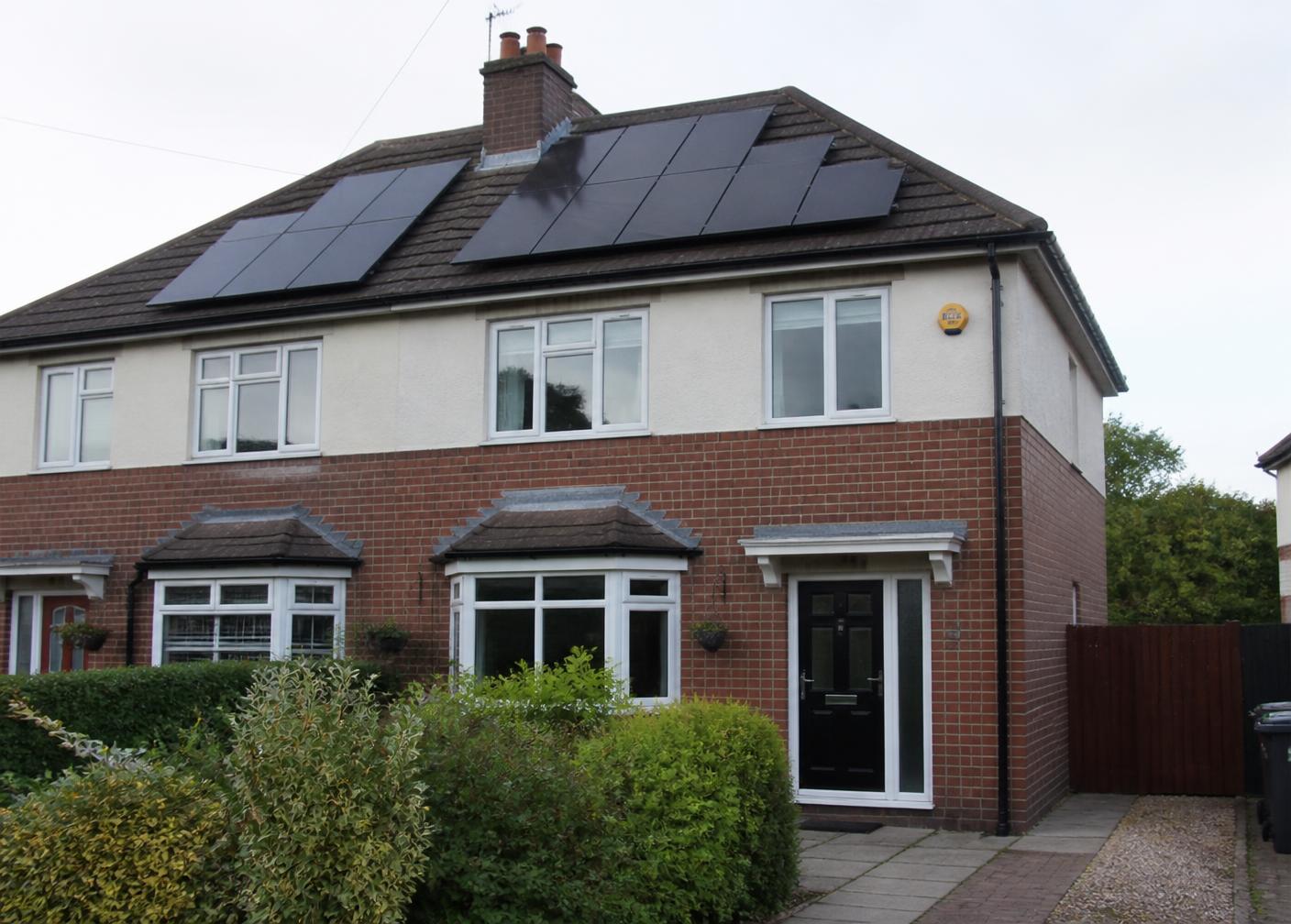
Most homes we fit take a 4–6 kWp array — 10 to 15 panels. What that's worth to you depends on your consumption pattern, your roof pitch and orientation, and whether you add storage. We work all four out before we quote a figure.
Where the money goes
Three things decide whether solar pays for your household
Self-consumption
Every unit you use as you generate it replaces a unit you'd have bought. This is the biggest single lever, and it's why we ask how your household actually runs before sizing anything.
Export under SEG
Units you don't use go to the grid, and your chosen SEG supplier pays for them at their published rate. Rates differ between suppliers and change, so treat export as a secondary return, not the main one.
Shifting with storage
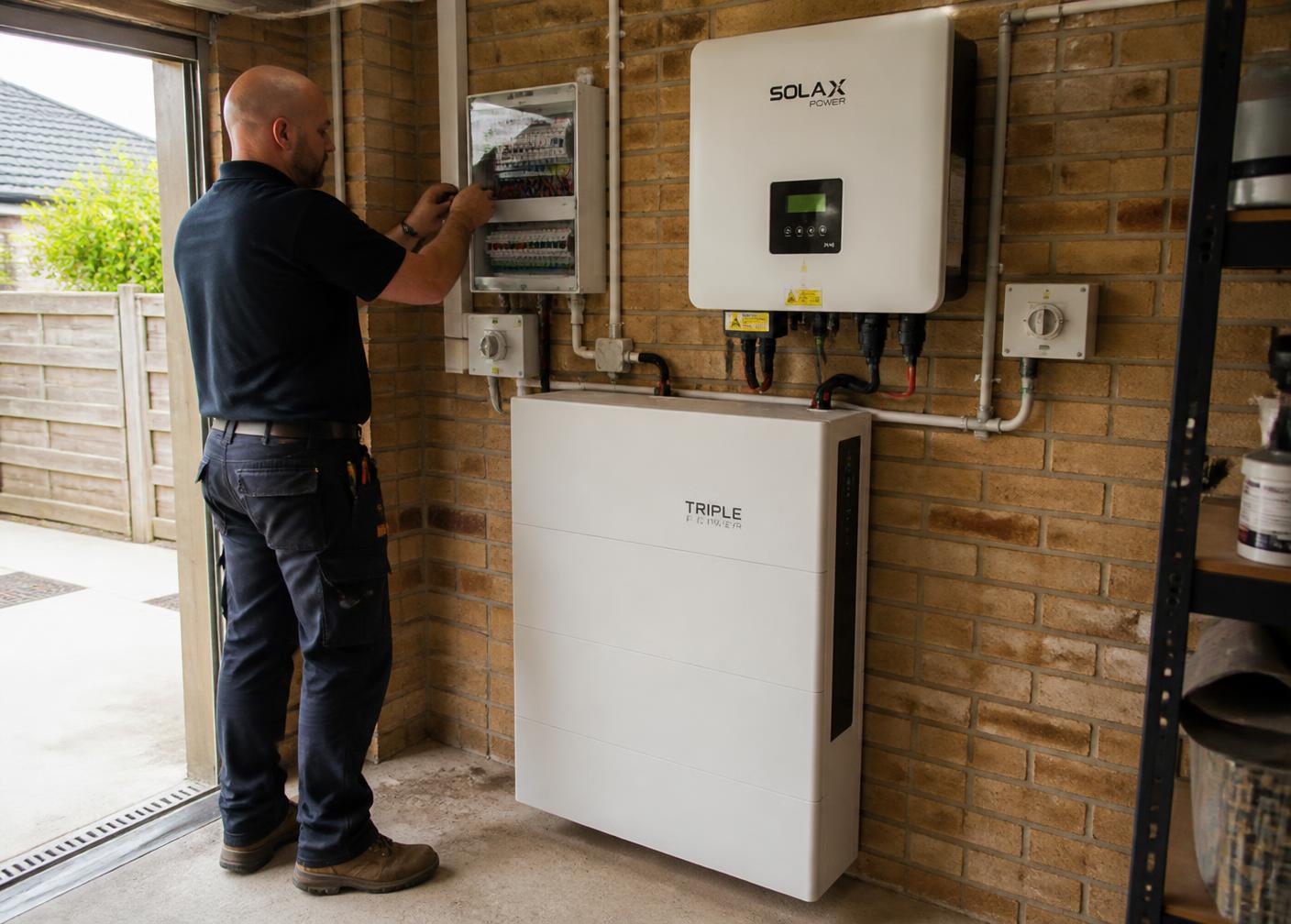
A battery stores midday generation for the evening peak, and on a time-of-use tariff can also charge on cheap overnight units. It raises self-consumption and the up-front cost together.
Paying for it
Finance options
We'd rather you paid outright if you can. Where that isn't practical, these are the routes our customers use.
Pay in full
Deposit on order, balance on commissioning. No finance costs, shortest payback.
Staged payment
Deposit, materials payment on delivery, balance on handover. Deposits are protected under the RECC consumer code.
Third-party credit
Fixed-term unsecured lending through an FCA-authorised lender. Rates and terms come from the lender, not from us, and we show the total amount repayable alongside the cash price.
Commercial lease or PPA
For larger domestic-scale and farm arrays. Covered on our commercial page.
Credit is subject to status and affordability checks. Wattfield Solar acts as a credit broker, not a lender.
Install process
What the six weeks actually look like
Lead times vary with scaffold availability and DNO response. These are the stages, in order.
Day 0
Desktop quote issued from aerial imagery and your annual kWh figure.
Week 1–2
Site survey: rafters, shading, consumer unit, cable route. Fixed written quote.
Week 2
Order placed. DNO application submitted (G98 notification, or G99 where required).
Week 4–6
Scaffold erected, usually the working day before the install.
Install day 1
Mounting rails, panels, roof penetrations weather-sealed and inspected.
Install day 2
Inverter, battery, isolators, metering, testing and commissioning.
Within 10 days
MCS certificate, electrical certificate, monitoring login and SEG pack.
FAQ
Questions we get every week
- How much will I actually save?
- It depends on how much of your generation you use at home. We model your figure from your annual kWh and a shading-adjusted yield estimate for your roof, and show the workings in the quote. We don't publish a single headline saving, because the honest answer varies by household.
- What is the Smart Export Guarantee?
- SEG is the scheme under which licensed electricity suppliers pay you for units you export to the grid. Rates and terms are set by each supplier and change over time, so compare current tariffs yourself — we supply the MCS certificate and export MPAN details your chosen supplier will ask for.
- Do I need planning permission?
- For most pitched roofs, panels are permitted development. Listed buildings, conservation areas and some flat-roof or ground-mount arrangements are exceptions. We check at survey stage and tell you before you commit.
- Will my roof take it?
- A typical 4–6 kWp array adds roughly 12–15 kg per square metre. Our surveyor inspects rafter size, spacing and condition. If it needs strengthening or re-battening we say so in the quote rather than on the day.
- Is a battery worth adding?
- If you're out during the day, usually yes — it moves generation to the evening. If you're home all day with high daytime use, the case is weaker. We quote both with and without so you can see the difference.
- What happens if something fails?
- Panels carry 12–25 year product warranties and 25–30 year performance warranties depending on brand; inverters and batteries typically 10–12 years. Our workmanship warranty is 10 years and aftercare goes to an engineer, not a ticket queue.
Get a figure for your roof
Tell us your address, roughly what you spend on electricity and whether you're considering a battery. We'll come back with a sized system and a price range within one working day.